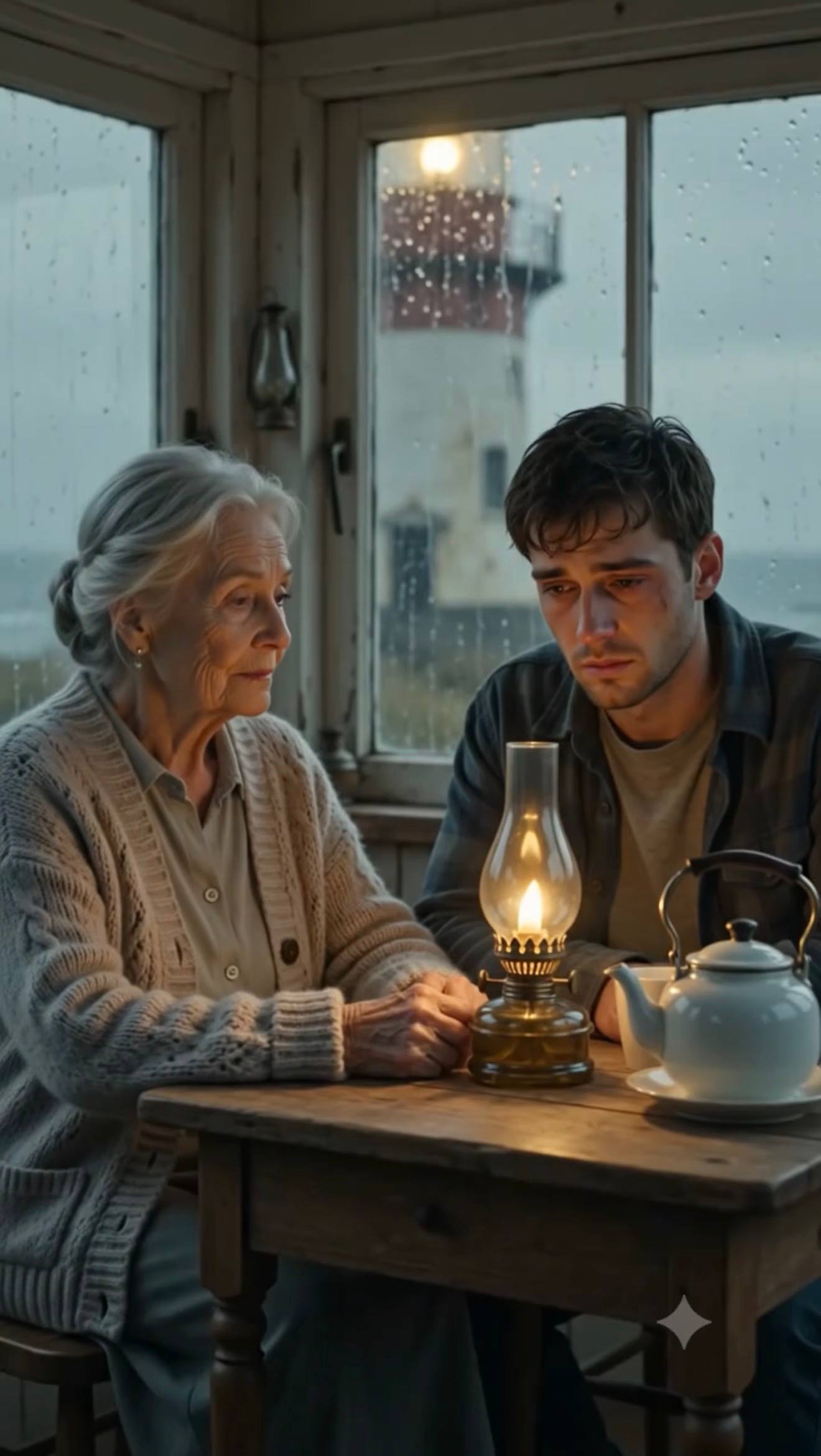
Evelyn kept time by the lighthouse: tea at seven, letters on Monday, a cliff walk to count gulls. Her small certainties—her sister’s handwriting, the exact angle of light in the east window—held her steady. One wet evening she found a young man at the base of the cliff path: mud on his face, a torn coat, a battered notebook clutched like a lifesaver.
He said his name was Aaron. His eyes were half fear, half resolve. He kept glancing over his shoulder as if the dark had ears. Evelyn wrapped him in an old blanket and brought him inside. Inside, she sensed diesel on his breath, a photo folded between pages, encrypted strings of text in hurried handwriting. It fit into one hard fact: someone wanted what was in that book. A car engine purred on the lane—too close. Headlights sliced the curtains. Evelyn froze, feeling old fears remade into action. Continue in comments
704 words Evelyn moved with deliberate steadiness. Age had taught her to conserve motion; necessity now demanded purpose. She set the kettle, prepared a couch, and tucked a blanket over Aaron as he slept in fits, the notebook pressed to his chest as if paper might ward off pursuit. In it were lists, transfers, names. He was young, but his jaw carried a tiredness she recognized—the same hard line she’d seen on a nephew she once tried to save.
Morning cleared the storm’s debris but not the tension. Aaron spoke in clipped sentences: an analyst at a regional NGO who’d found a ledger detailing bribes linking contractors and council officials. He’d meant to send the evidence to a reporter. Instead, his home had been ransacked, his phone smashed. He’d followed a trail to the lighthouse after finding Evelyn’s name on an old receipt—an unlikely refuge, someone he guessed might not be easily cowed.
They needed more than hiding. Paper alone could be destroyed; noise could not. Evelyn proposed a simple logic: move the story into daylight. Publicity would blunt secret hands. She called in favors—Harrison at the county paper, her niece Isla who taught encryption, Tom the retired fisherman who knew every coastal shortcut. By afternoon they formed an improvised convoy: Tom’s truck, Evelyn’s stubborn gray sedan, Aaron wedged between fishing nets like contraband.
At the station Harrison received them with steady eyes. He scanned the notebook, noted timestamps and bank numbers, and agreed to publish a preliminary piece the next morning. Aaron would go to a safe house. It should have been the straight arc of caution. Night had other plans.
Evelyn couldn’t sleep. The lighthouse felt expectant, as if it waited on a hinge. She heard soft clicks—keypads, deliberate, practiced. Peering through blinds she saw two figures moving along the property line, breath fogging in the chill. Flashlights bobbed. They came prepared.
Evelyn acted. She had an old rope under a floorboard—used long ago to hoist a broken sail. She coiled it into her hand, then took the back path she alone favored: narrow, overgrown, known to stubborn walkers. Tom’s truck idled down the lane; its engine wheezed—someone had cut a hose. For a breathless instant she felt the old helplessness from years when someone she loved had not come home. Then she did something she rarely let herself do: she raised her voice. She called names, not as a plea but as a signal—loud, raw. Windows lit up. Neighbors appeared on porches in robes and slippers.
The men paused. They did not expect community as a defense. In the confusion Aaron’s safe-house call turned out to be a decoy; the pursuers had been baited away from the shore where they could operate unseen. The sudden glare of attention unsettled them.
One did not retreat. A third figure stepped out from shadow—older, composed, scar along his palm. He spoke like someone used to buying consent: “You don’t have to do this, Evelyn,” he said. His voice carried the quiet weight of men who believed money cleaned inconvenient truths. “Walk away. No one gets hurt.”
She answered simply, with the stubborn fact of her life: “I keep a light for ships that lose their way. I won’t put it out because I’m afraid.”
What followed was less a cinematic rescue and more the slog of ordinary resistance. The reporter returned with a camera crew. Calls from readers pushed the county sheriff’s office into motion. Microphones pointed at men who had hoped to move in shadows. Publicity turned an illicit ledger into official trouble: subpoenas, bank inquiries, the slow gears of institutional scrutiny.
The notebook became a lever. Its pages—transfers, signatures, dates—could not be wishfully erased. The process was not swift. There were counterattacks: leaked alternative narratives, attempts to smear Aaron, threatening calls at odd hours. But the town had been woken. People attended meetings, demanded accounting, and pressed officials.
Months passed. Spring softened the coast. Work on the waterfront stalled as contracts were reviewed and investigations opened. Aaron found steadiness in new work—an auditing nonprofit that reviewed municipal projects. He no longer hid documents under mattresses. Harrison’s piece earned a modest prize, but the real change rippled through everyday life: neighbors asking questions, council sessions with packed public comment, a renewed vigilance against easy deals.
Evelyn sat on the lighthouse steps with a mug warming her hands. She added a line to her ledger of small comforts: the night she refused to let darkness decide. She thought about rescue. It was not always a dramatic pull from a cliff face. Often it was the simple decision to turn on a light, make noise, and call a town to bear witness. That stubborn act had saved a young analyst, preserved a record of wrongs, and kept a small place from being quietly sold.
Rescue, she learned, is patient insistence; it is community in motion. It does not erase scars, but it changes the balance.