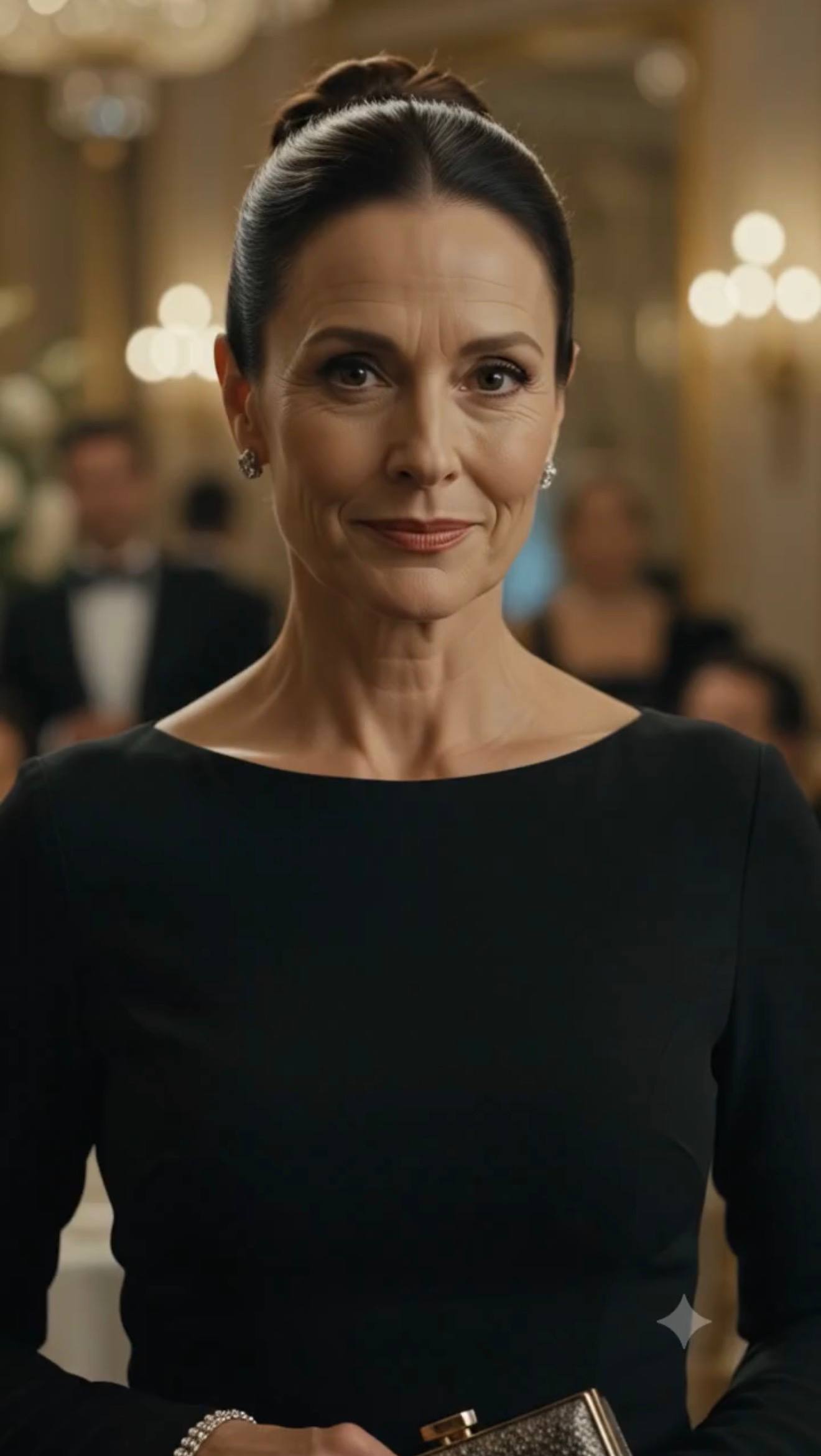
Twenty years behind the counter had taught me how to vanish: bun pinned tight, apron spotless, a practiced smile for every returned package. They called me “the helpful clerk” like it was all I was. At fifty‑eight I’d made peace with being small — until the storm knocked the power out and a soaked stranger stumbled into the vestibule carrying something limp against his chest.
He was young, jaw sliced, eyes wide and frantic. He spat a name I’d heard in hushed tones for years: “Dawson.” Dawson — the landlord who’d padded rents, shrugged off pleas, and once shoved an eviction notice into my hands with a sneer.
The coat shifted. A tiny shoe slid free and skittered across the tile. The stranger pushed the bundle toward me; rain darkened the hem and a smear of blood stained the cuff. My apron, suddenly absurd, felt like nothing against whatever I should do. My first instinct was to step back and wait for sirens. Instead my fingers closed around the old brass lantern Mrs. Adler had left me “for nights like this.”
I lifted it — and a key turned in the lock upstairs.
Continued in the comments 👇
The key’s scrape stopped everything. A shadow froze on the stair — then stepped down. Dawson filled the doorway, taller and meaner in the rain’s outline, that same smug grin. A thin man in a hoodie hovered behind him, eyes flicking to the street like he was timing exits.
I held the lantern up as if it were an accusation. The stranger at my feet — the diner regular — mouthed “Please.” The child coughed, tiny and wet, burrowing closer into the coat.
Dawson met my gaze. “What is this, Doris? Some melodrama?” His voice slid across the vestibule.
Melodrama, I thought, and then remembered all the times I swallowed sharp words so younger clerks wouldn’t flinch. The back room phone was three slow steps away. I could call. I could stay invisible. Thunder rolled and begged me to look the other way.
Instead I set the lantern on the cracked tile and stepped between Dawson and the stranger.
“You don’t belong on this block,” I said.
He laughed. “You gonna stop me, Doris? You in that cardigan?” The hoodie man edged forward.
The stranger shoved the coat at me harder. A small face peeked out — a boy of six, hair plastered, lips blue with cold. “They’ll take him,” the stranger blurted. “He’s my nephew. Dawson’s men… they’ll sell him to crews. I can’t— I can’t pay.”
The air soured. Dawson’s grin thinned. “You meddle in what’s ours and you’ll be sorry,” he warned.
A siren wailed far off and vanished. Choices narrowed until they were sharp. I thought of my sister’s boy, of parcels that arrived and never opened, of how shame paled beside a child’s frozen fingers.
I picked up the lantern and lifted it high — not to strike, but to signal. Light caught Dawson’s eyes; for a heartbeat there was doubt. The hoodie man lunged. I stepped back; the diner man scrambled up to shield the child.
A blow cracked across my shoulder; the cardigan tore. Hot pain bloomed. Copper filled my mouth and my mother’s advice came back: “If they call you small, show them what a full heart does.”
I wasn’t strong like a fighter, but my hands had tied hundreds of parcels, steadied shaking hands at the counter. I grabbed Dawson’s wrist, twisted, and used his momentum to shove him toward the slick floor. He slipped, cursed, and hit hard. The boy cried out.
The hoodie man rushed. The stranger intercepted him and took the hit, collapsing with the wind knocked from him. Dawson swore, scrambled up, and bolted for the stairwell to fetch his men — but something else had already moved. Windows along the block opened; faces peered out. An old neighbor stepped onto his stoop, baseball cap and flashlight in hand.
In an instant the block gathered. The baker burst down with flour on his apron and a rolling pin. Mrs. O’Neal from 12B — tiny but fierce — slammed her door and stood beside me. Someone had called 911; a calm voice promised help was coming.
Dawson scowled at the crowd, shoved past, and fled into the rain. The hoodie man hesitated, then ran after him. No one gave chase; the slick street handled its own justice. We stayed, breathing, lantern light wobbling over wet faces.
The child clung to the stranger’s hand, then reached for me as if taught to trust. He smelled of rain and biscuits. I sat on the step and held him in my lap. His small fingers loosened around mine.
Help arrived in that stretch that drags and then snaps: police lights painting the street, an ambulance checking the stranger for broken ribs, officers gathering statements. Neighbors offered clothes, hot tea, blankets. They took the kid’s name in soft tones and wrote down Marco’s shaken account.
Marco had run out of options after losing his job and falling into debt. Dawson’s crew had been collecting payments in envelopes, turning people’s desperation into profit. The officers listened and promised to follow leads.
Afterward the neighborhood rallied. The post office became a hub for donations — coats, soups ladled into cups, blankets. Marco stayed long enough to be bandaged, fed, and connected to a shelter program. The boy, Liam, was placed with relatives while child services worked the case.
Exhaustion never came the way I expected. Instead a steady ember glowed where fear had been. I kept the lantern by the back door. At night I’d run my hand over it and remember how light had changed the block, how a few people choosing to act toppled a small terror.
A week later Marco returned with an address for a program that could help him find honest work. He thanked me, voice trembling. Liam pressed a crayon drawing into my hand: a bright lantern and five stick figures around it. I framed it above the sorting table.
Dawson never came back. Word travels faster than rain. The police picked at his network until it unraveled; neighbors kept watch in shifts. I still signed for packages with the same neat hand. When patrons called me brave, I smiled and tucked the compliment like a stamp behind my ear.
Bravery, I learned, is a quiet ledger — small acts added up, accounted for, warmed by community. The lantern on the wall now glows for more than light; it’s a reminder that being seen can start with a single hand reaching out.