Marcus and I found out I was pregnant on a Tuesday morning, standing in our garage because that’s where the pregnancy test happened to be when I couldn’t wait any longer.
He didn’t say anything for almost ten seconds. Then he sat down on the cold concrete floor, right there next to the lawnmower, and started laughing and crying at the same time.
“We’re having a kid,” he kept saying, like he needed to hear it out loud to believe it.
Four months later, he was deployed overseas for what should have been a routine logistics assignment. Six weeks after that, two officers stood on our porch, and nothing was routine ever again.
I spent the rest of my pregnancy in a fog I still can’t fully describe. My mother-in-law, Patricia, made it worse. She’d never approved of me, and grief seemed to give her permission to say it out loud.
“If you’d convinced him to leave the service when I asked, none of this would have happened.”
She said it at the memorial. She said it again at Thanksgiving. She didn’t come to the hospital when I went into labor two weeks later, and some small, stubborn part of me had still hoped she would.
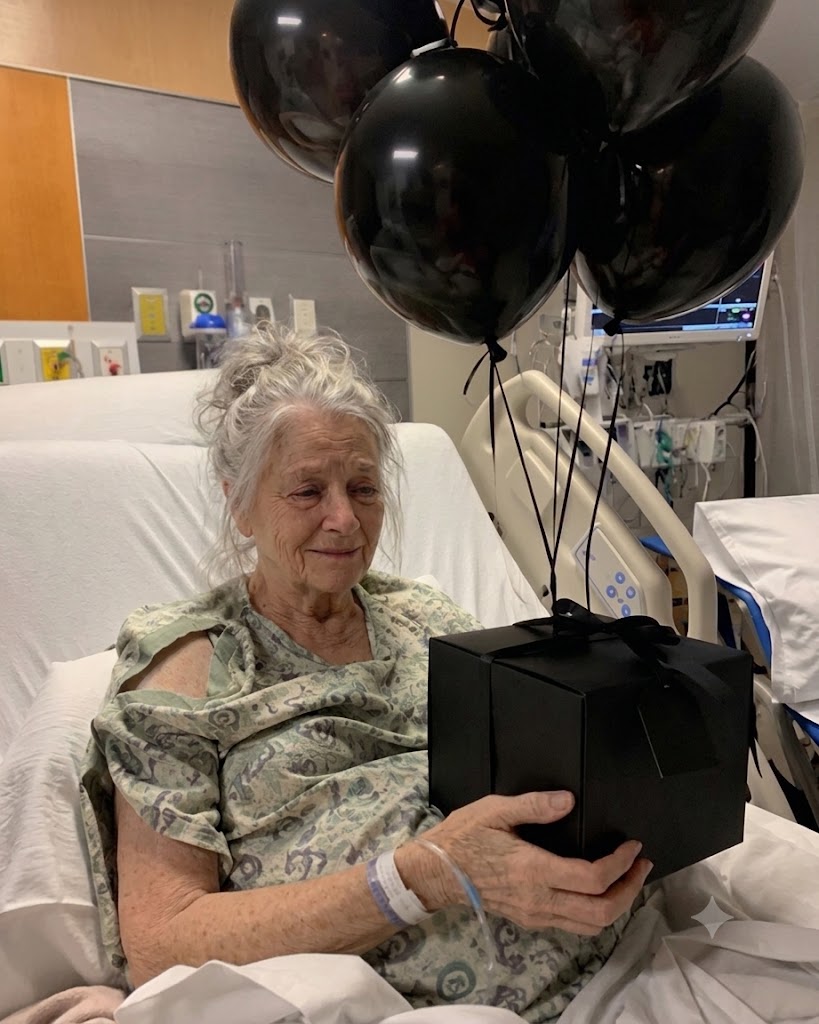
The morning after I gave birth to our son, Eli, there was a knock at my hospital room door. Not a nurse. A man in a work uniform, holding a small metal lockbox and a clipboard.
“Ma’am, I need your signature. This was scheduled for release forty-eight hours after a specific date — your husband set it up eleven months ago.”
Continued in the c0mments 👇
I stared at the lockbox like it might bite me.
“I don’t understand,” I said. “Released by who?”
The locksmith checked his clipboard. “Sergeant Marcus Delaney. He had this filed with a private escrow service — instructions were to deliver it exactly two days after his child’s birth date, verified through hospital records. Company’s done it before, ma’am. It’s more common than you’d think, with military families.”
I signed with a hand that wasn’t entirely steady, and he left the box on my tray table.
It took me a full minute before I could make myself open it.
Inside was a folded letter on top, in Marcus’s handwriting — that same cramped, slanted scrawl he used for grocery lists and love notes alike.
If you’re reading this, my math worked out, and our kid made it here safely. Which means you did too. I was counting on that.
I had to set the letter down and just breathe for a second.
I know this is a weird way to do this. But I wanted you to have something solid to hold onto for once, instead of just words. So here’s what’s inside:
Underneath the letter was a small hard drive labeled FOR ELI — WATCH WHEN HE ASKS ABOUT ME. Beneath that, a stack of sealed cards, each one labeled by age: Eli at 5. Eli at 10. Eli at 16. Eli at 18.
At the bottom was a folder — deployment life insurance paperwork, a beneficiary designation changed three months before he died, and a separate trust document, already filed, already active, in both my name and our son’s.
There was one more envelope, smaller than the rest, marked simply: Read this one last, when you’re ready. No rush.
I opened it anyway, right then.
You’re probably exhausted and running on no sleep and trying to be strong because that’s what you do. You don’t have to be. Not for me, not for anyone. Fall apart if you need to. It won’t undo anything good you’re building.
One more thing. I know my mom has said things to you. I need you to hear this clearly: none of what happened to me is because of anything you did or didn’t do. If she keeps saying otherwise, you don’t have to carry that. You never did.
I read that paragraph four times before I could see straight through the tears.
That afternoon, once the room was quiet and Eli had woken for a feeding, I plugged in the hard drive.
The first file opened to Marcus sitting in our half-finished nursery, wearing the flannel shirt I’d stolen from his closet a dozen times.
“Hey, kid,” he said to the camera, grinning that same crooked grin. “If you’re watching this, it means I figured out how to use the tripod, which honestly might be the bigger accomplishment here.”
I laughed out loud for the first time in what felt like months.
“I don’t know you yet,” he went on, voice softening. “But I already love you more than I know what to do with. Ask your mom. She’ll tell you I cried buying a crib.”
I held Eli against my chest and watched his father talk to him from a version of the future Marcus had never gotten to see — but had clearly refused to leave unplanned.
The lockbox sits on my nightstand now, next to the letter. The hard drive is backed up in three places, because I know exactly how Marcus would feel if one of them failed.
And when Eli is old enough to ask, I’ll tell him his father found a way to show up anyway — right on schedule, exactly when he said he would.